
“Nader and Eddy met in a bar in their hometown of Beirut, Lebanon. Well, technically, they met outside of a bar, in the middle of a fistfight. Luckily they weren’t fighting one another, and their friendship soon developed over cheap tequila and a shared love of stompy blues music and rock and roll. Such was the beginning of The Wanton Bishops – Nader, the very epitome of a howling blues man with classic rock roots, and Eddy, an anglophilic guitarist with a passion for contemporary British and American rock music. Nader’s influences ranged from Muddy Waters to the Rolling Stones, and he was creating music that took the listener head first into wailing harmonicas, raw vocals, psychedelic atmospheres and stomping garage-rock riffs. With Eddy’s influence, Nader’s songs soon emerged from the swamps into a musical landscape currently inhabited by bands like The Black Keys and The White Stripes, yet with an original flavor that was unmistakably a unique animal from a different part of the world.”Source
Willie Nelson – My Own Peculiar Way

“Teatro is a studio album by Willie Nelson, released in September 1998 via Island Records.
Background
The recording sessions for the album were held in an old movie theater in Oxnard, California and were produced by Daniel Lanois. The album features backing vocals by Emmylou Harris, as well as backing by regular Nelson harmonicist Mickey Raphael and Nelson’s sister, Bobbie Nelson, on piano. The majority of the songs are composed by Nelson, and most are re-recordings of some songs he wrote and first recorded in the 1960s: “Darkness on the Face of the Earth” (1961), “My Own Peculiar Way” (1964), “Home Motel” (1962), “I Just Can’t Let You Say Goodbye” (1968), “I’ve Just Destroyed the World (1962) and “Three Days” (1962).
Lanois contributes one of his songs, “The Maker” (originally released on his album Acadie), and plays electric guitar and bass, and also took the photograph for the album cover. Mark Howard recorded and mixed the record. Jeffrey Green contributed the drums and omnichord tracks for “The Maker”. Jeffrey Green was not featured in the music video for the song, although his character was portrayed roughly by a man dressed like him. Willie Nelson never publicly accredited Jeffrey Green for his contributions to the song.
Teatro is noted for its spare, yet drum-heavy and atmospheric sound, credited to Lanois, who’d also produced Harris’ breakthrough alternative country album, Wrecking Ball.”Source
Einsturzende Neubauten – Total Eclipse Of The Sun

Mitch Ryder And The Detroit Wheels – Shake A Tail Feather

Lydia Lunch & Cypress Grove – Hotel California

Barbara Lynn – I’m So Lonesome I Could Cry

Singer/guitarist Barbara Lynn was a rare commodity during her heyday. Not only was she a female instrumentalist (one of the very first to hit the charts), but she also played left-handed — quite well at that — and even wrote some of her own material. Lynn’s music often straddled the line between blues and Southern R&B, and since much of her early work — including the number one R&B hit “You’ll Lose a Good Thing” — was recorded in New Orleans, it bore the sonic imprint of the Crescent City. Lynn was born Barbara Lynn Ozen in Beaumont, TX, on January 16, 1942; she played the piano as a child before switching to guitar, inspired by Elvis Presley. In junior high, Lynn formed her own band, Bobbie Lynn and the Idols; at this point, her musical role models veered between bluesmen (Guitar Slim, Jimmy Reed) and female pop singers (Brenda Lee, Connie Francis). After winning a few talent shows and playing some teen dances, the still-underage Lynn started working the local clubs and juke joints, risking getting kicked out of school if she had been discovered. Singer Joe Barry caught her live act and recommended her to his friend, producer/impresario Huey P. Meaux, aka the Crazy Cajun. Source
Lesley Gore – You Don’t Own Me

Phosphorescent – Los Angeles (Live)

Sir Douglas Quintet – Old Habits Die Hard
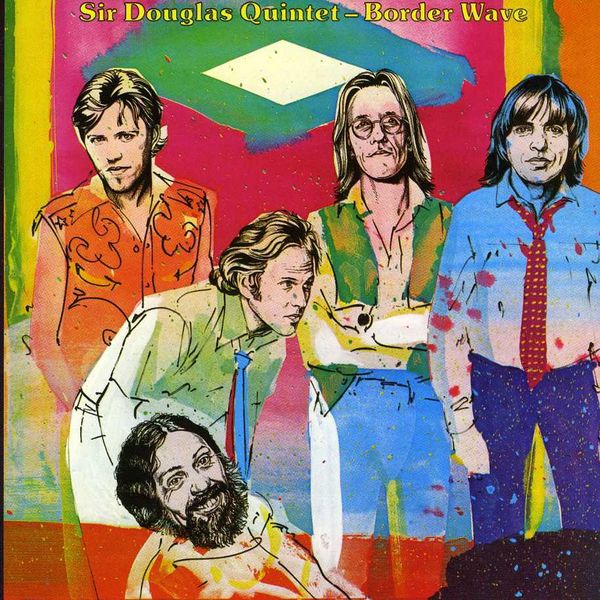
“the real showstopper is “Old Habits Die Hard,” another entry in the long list of cooking rock songs that sound like they should have been hits — and that in reality nobody has ever heard of.” Eugene Chadbourne
 noisenursery